
Roundtable discussion: the supply, demand and opportunities within the Scottish care home sector
In February 2026, Christie & Co, Scottish Care, and Miles Briggs MSP hosted a roundtable discussion at the Scottish Parliament to explore the challenges and opportunities shaping the Scottish care home sector.
Business. Built around You.
Your expert business property advisers

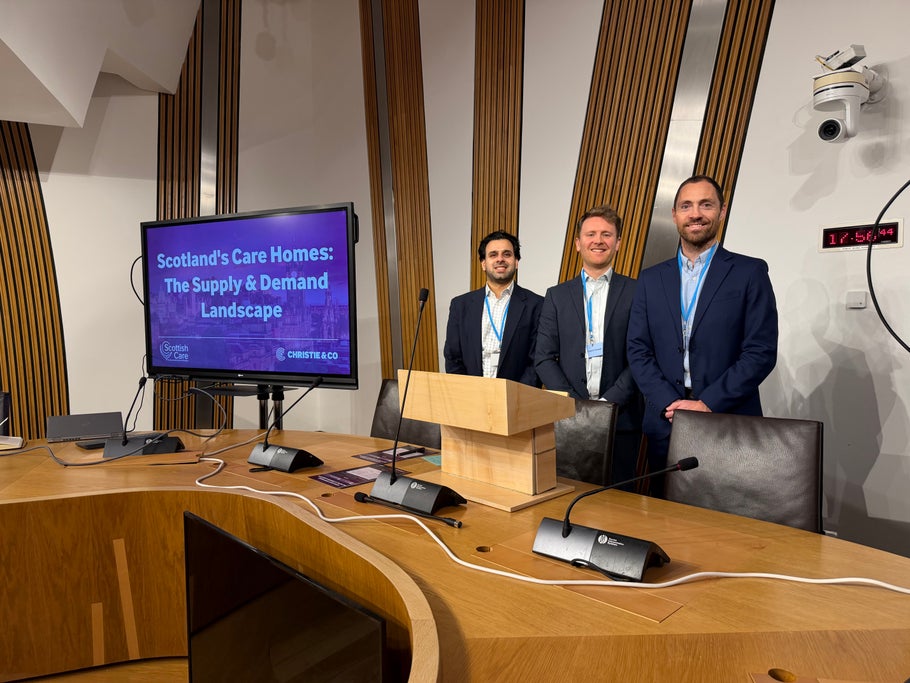
Pictured: Karun Ahluwalia, Andrew Fyfe, Martin Daw from Christie & Co
“When the care sector works well, the NHS works well. A shrinking care sector isn’t good for our NHS,” said Miles Briggs as he opened the session.
The discussion, which was held at the Scottish Parliament in February 2026, brought together key voices from across the sector, including Andrew Fyfe and Martin Daw from Christie & Co, Karen Hedge from Scottish Care, senior members of the Care Inspectorate and a diverse group of operators and developers. Their contributions reflected a shared concern about the future shape, sustainability, and capacity of Scotland’s care home sector, and the impact that will have on people who work and live in them.
Below is a summary of the key themes that emerged…
OCCUPANCY & PATIENT DISCHARGE
Participants raised ongoing challenges around occupancy, particularly the widening gap between NHS discharge pressures and the capacity available within care homes. Although providers are prepared to welcome new residents, the flow of people being discharged remains slow, resulting in avoidable system bottlenecks.
Operators reported a noticeable rise in residents presenting with higher distress levels and increased complexity compared with just a few years ago. This trend is reshaping daily support requirements in terms of staff time and skillset. Many in the room felt these issues are not receiving adequate attention, and that discussions around occupancy, acuity and discharge need to return firmly to the sector’s priority agenda to ensure that people get the right support in the right place at the right time.
THE PLANNING SYSTEM
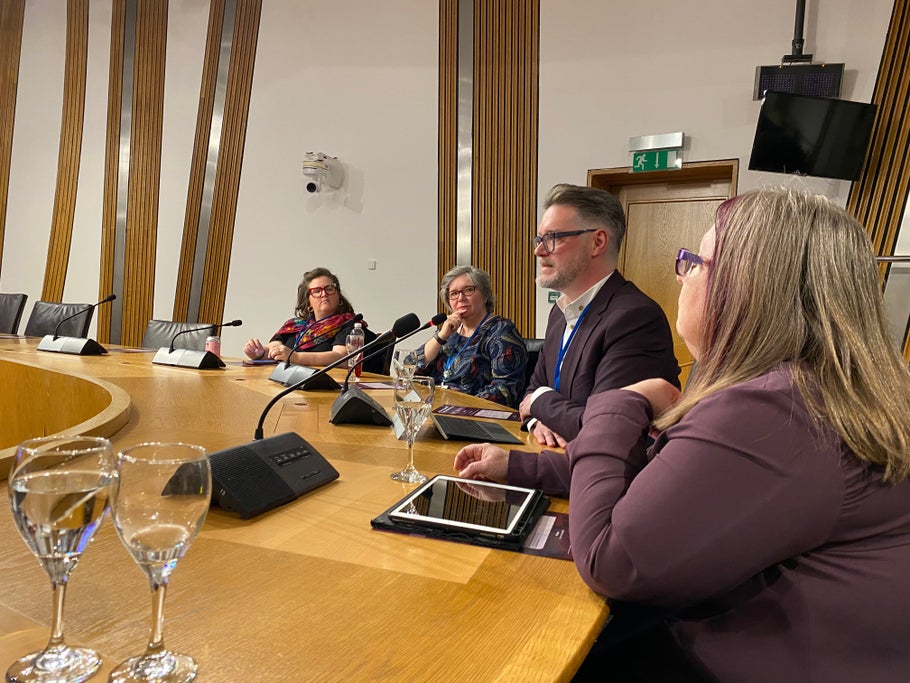
Care Inspectorate representatives reflected on the marked decline in new care home development across Scotland over the last 18 months. Without fresh investment and modern facilities, there is a risk that existing care homes will struggle to remain fit for purpose.
Following a wide-ranging consultation reviewing home size, capacity, design and outcomes, the Care Inspectorate concluded that homes within the 60 to 100 bed range can deliver strong results when built around small group living models. This evidence informed its decision to raise the long-standing 60-bed cap to a new upper limit of 100 beds, with safeguards to maintain quality.
Developers welcomed the change but stressed that Scotland’s planning environment remains exceptionally slow and burdensome. Some applications have taken up to two years to secure consent - delays that can halt development entirely. By contrast, the English planning system was described as far more workable, raising concerns that Scotland could lose inward investment at a time when funders are willing to support new schemes.
Participants also noted that only five or six developers now specialise in care home construction in Scotland, creating a fragile pipeline. Design requirements, particularly the rigidity of the 10-bedroom unit model, were highlighted as further barriers. While developers remain supportive of small‑group living as a model that aligns with principles of dignity, homeliness and personalisation, many argued that greater design flexibility is required to secure viable developments without compromising these rights‑based outcomes. Many advocated for a degree of flexibility - for example, allowing variations within a nine-to-12-bed range - to keep projects viable.
Despite a clear need for development, several operators confirmed that most of their construction activity is currently happening in England. One highlighted a 60-bed project in Dundee facing significant delays, with completion unlikely this year, reinforcing concerns about planning and design constraints slowing progress across Scotland.
STAFFING CHALLENGES
Staffing emerged as one of the most immediate and pressing challenges facing operators across Scotland. Participants repeatedly stressed that safe, skilled, and stable staffing is fundamental to protecting residents’ rights to consistent, high‑quality, person‑led care. Workforce insecurity, whether driven by policy shifts or financial pressures, was described as a direct risk to these rights. One contributor highlighted that their organisation relies on overseas workers, noting that a significant proportion of their workforce is made up of non-UK nationals. With recent changes to overseas visa rules, their organisation has already established an internal task force to prepare for the potential impact.
Concerns were raised about the cumulative effect of policy shifts over the past year, which have heightened uncertainty and placed additional strain on staffing stability. Rising employer costs, such as the increase in National Insurance contributions, have already had tangible consequences, including the closure of multiple care homes across the country last year.
Participants agreed that without a stable pipeline of staff, the type and consistency of care that providers are able to deliver will inevitably be affected.
THE FUTURE OF SMALLER, CONVERTED HOMES
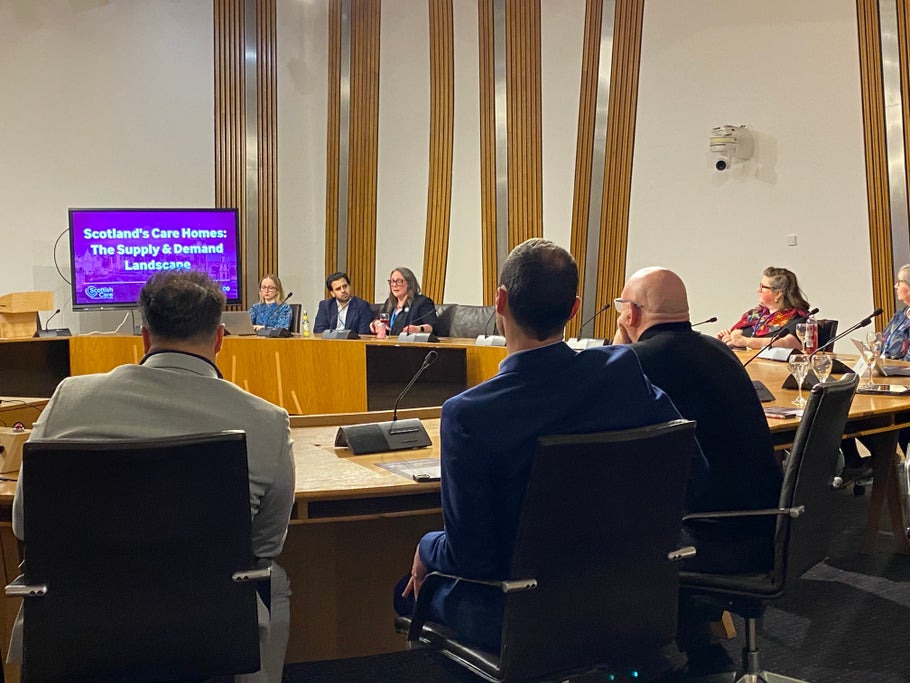
Participants expressed concern for the future of smaller homes, especially those in rural areas, which may struggle to remain viable without targeted support. While demographic data often highlights a clear need in less affluent or remote regions, the practicalities of delivering care in those areas remain complex. This raises concerns about equitable access to care and the rights of people in rural or economically disadvantaged areas to receive support close to home and community.
Rural locations often face staffing challenges and frequently depend on agency staff, which not only increases costs but also needs to be managed to ensure continuity of care and support.
At the same time, for developments in more urban locations where it is generally easier to recruit staff, it can be financially challenging because they lack sufficient levels of private pay demand to balance the low rates paid by the government via the National Care Home Contract.
This imbalance between need, workforce availability, and financial viability prompted discussion on potential solutions. One suggestion was the introduction of long-term, high loan-to-value financing to support the construction of care homes in areas that struggle to attract traditional investment. In return, operators could commit to making a significant proportion of beds - such as 75% - available for local authority residents.
Participants agreed that exploring new funding models may be essential if Scotland is to maintain a balanced, resilient care landscape that meets the needs of both rural and urban communities.
FUNDING & LOCAL AUTHORITY PROVISION
Participants emphasised that predictable and adequate funding is not only a financial necessity but a rights issue: without sustainable commissioning, individuals may face reduced choice, delayed access, or the loss of local provision, all of which can limit their autonomy and security.
They also raised significant concerns about the impact of shrinking local authority funding on occupancy and overall system flow. Where funded beds could previously be filled within around 10 days, this now commonly stretches to between 12 and 14 days, leaving capacity unused despite ongoing hospital pressures. Operators stressed that this slowdown is consistent across Scotland and affects homes of all sizes and quality ratings, including those performing strongly from a regulatory standpoint.
Contributors highlighted that the issue goes beyond temporary delays and reflects deepening financial strain across the sector. Local authority budgets have not kept pace with rising operating costs, and many providers reported that fee levels no longer reflect the true cost of delivering care, particularly where agency staffing is required to maintain safe ratios. Several noted that charitable and smaller providers are especially exposed, as they lack the economies of scale that allow larger groups to offset increasing expenditure.
This led to a wider question from the group: with both local authority and private beds being lost, yet only private beds being built, what is going to happen to people needing local authority funded beds going forward?
Participants agreed that this question is becoming increasingly urgent. New entrants to the market are rare, and younger or smaller businesses face substantial barriers to starting up due to regulatory pressures, limited financial support, and difficulties accessing capital. As a result, Scotland risks losing not only essential publicly accessible beds but also the local jobs and community infrastructure tied to them.
There was a strong consensus that existing provisions must be protected where possible. Some providers expressed concern about losing beds through re-registration processes, while the regulatory representatives in the room emphasised that their approach is centred on supporting homes - particularly in smaller or remote communities - to remain open wherever feasible. Action plans and targeted support are often used to help services meet required standards, but participants warned that without a more sustainable funding model, such measures may not be enough to preserve capacity in the long term.
Beyond the impact on providers, contributors reflected on the broader consequences of closures. Every lost bed represents not only a loss of local care provision but a financial and social loss to the community, including reduced employment and diminished demand for local suppliers. One striking example involved community members chaining themselves to a home threatened with closure, underlining how integral these facilities are to local identity and support networks.
The section concluded with a shared view that chronic underfunding and a lack of coordinated long-term commissioning lie at the heart of the issue. Participants described the absence of a national strategy for future capacity planning as “a huge failure on the system,” and called for a more coherent, sustainable approach to ensuring Scotland retains the diverse mix of provision required to meet evolving needs.
A SHIFT IN DEMOGRAPHICS & CHANGING NEEDS
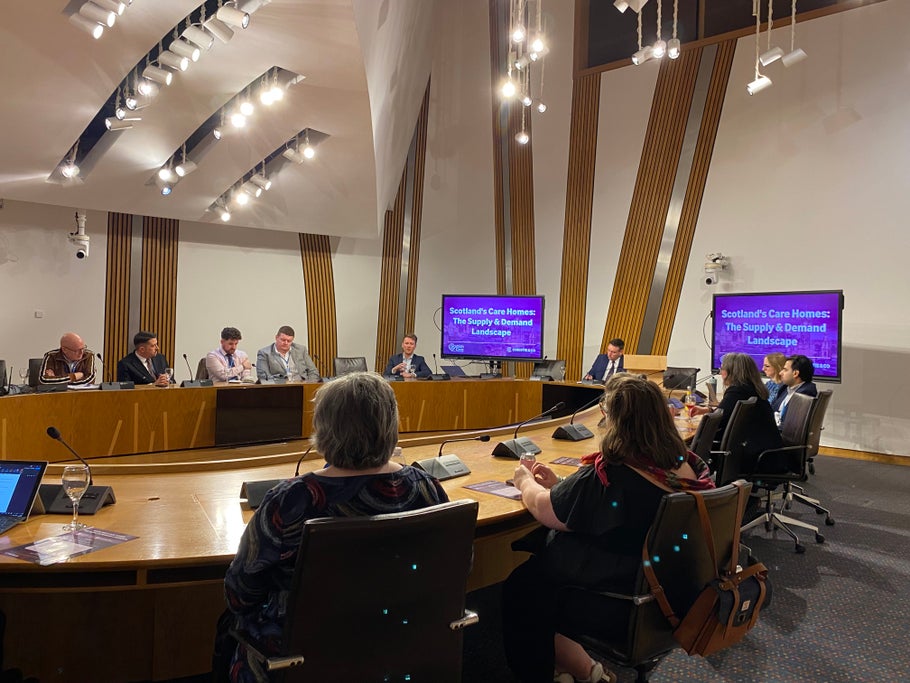
Participants noted that while care homes have traditionally focused on older adults, the demographic profile is shifting, with many individuals in the 50 to 65 age range now requiring the same level of support. Several attendees remarked that they could fill entire services with people in this group, yet they face barriers because their registration categories do not currently allow it. There is also no additional funding stream for people aged 50 to 65, despite local communities showing an increasing need for this type of provision.
Representatives from the regulatory side acknowledged this challenge and confirmed that the Care Inspectorate is considering removing the strict age 65 threshold. Instead, the focus would shift toward conditions associated with ageing, enabling services to respond more dynamically and inclusively. Participants agreed that care should never be dictated solely by age; it should be based on need, with people supported in the most appropriate of environments, where staff have the right skills and resources to deliver positive outcomes. This flexibility, they felt, is essential to ensuring people receive care where and when it is most appropriate.
The group also reflected on the wider policy context, noting that the push to keep people at home for as long as possible has, in some cases, resulted in individuals remaining in unsuitable situations until they reach a crisis point. This leads to hospital admissions that might otherwise have been avoided, creating pressure across the system and for the individuals and families affected directly. Attendees suggested that an “assessment bed” model could help bridge this gap, offering short-term placements within care homes to stabilise needs and determine the right long-term support. The consensus was that communities need a sufficient number of safe, homely environments to meet this growing demand.
Several participants spoke about how dramatically residents' needs have changed over recent decades. One contributor reflected that when they first worked in the sector in the late 1980s, residents were far more independent - mostdrove themselves to the home. Today, care homes are providing increasingly complex support, including end-of-life care, raising questions about whether the current system is sufficiently equipped and funded to deliver this effectively.
HOW ARE PROVIDERS ENSURING PORTFOLIOS ARE FIT FOR PURPOSE?
Discussion also turned to what additional elements are required to sustain care homes in the long term. While modern facilities are valuable, participants emphasised that people often choose care homes for the human connection they offer or similarity to their own home. High-quality buildings alone cannot meet residents’ needs without the skilled staff required to support them. Many argued that funding models must adapt to recognise the true cost of staffing, which represents the largest and most essential investment in care.
Attention then shifted to the future of older care homes. Contributors stressed the importance of making existing buildings as strong and sustainable as possible, using technology, energy efficiency improvements, and modernisation to extend their lifespan. However, these upgrades can sometimes require reducing the number of beds, for example, to enlarge rooms or meet new regulatory standards, and providers need financial support to undertake such changes. Without adequate investment, there is a risk of losing both capacity and the community value these long-established homes provide.
THE SCOTTISH GOVERNMENT’S KEY PRIORITIES OVER THE NEXT 12 TO 18 MONTHS
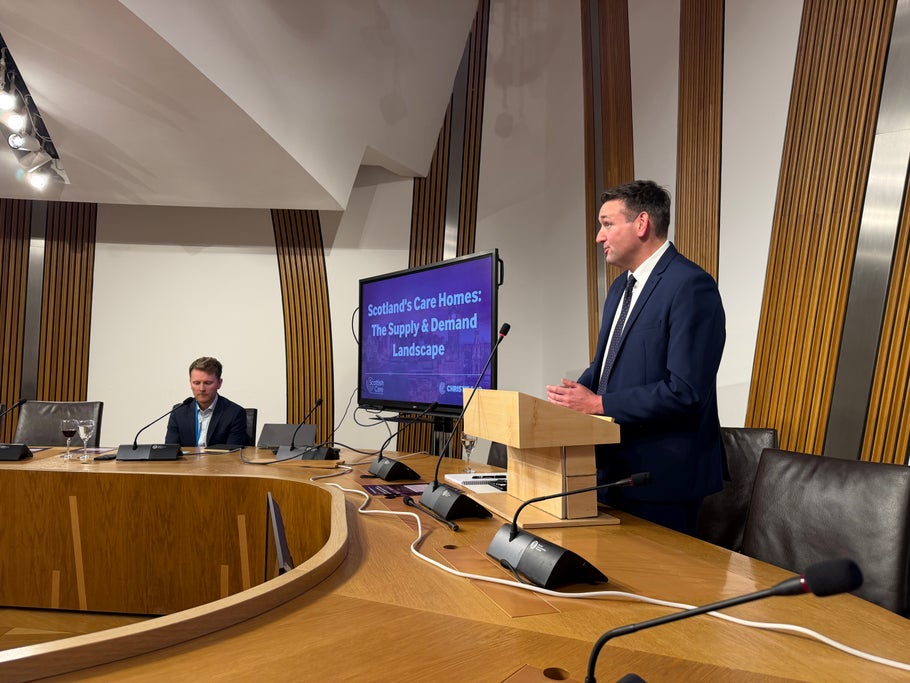
Miles Briggs set out what he believes should be the Scottish Government’s priorities for the months ahead. Sustainability, he argued, must underpin all future policy. With more people living longer, living alone, and expecting a broader range of tailored care options, Scotland needs a model that reflects modern demand rather than outdated assumptions.
He stressed that accelerating the planning process is critical if Scotland is serious about creating a sustainable, modern care landscape. Removing barriers to development would be essential to ensuring appropriate provision can be built at the pace required.
For further analysis on the Scottish care home market, read our ‘Scottish Healthcare Market Review 2026’ report, which launches on 17 March 2026.