
Ireland’s hotel market: looking beyond Dublin
After attending an insightful hotel event in Dublin in November 2026, Pierre Ricord (Head of Consultancy – Hotels at Christie & Co) reflects on the market in Ireland.
Business. Built around You.
Your expert business property advisers

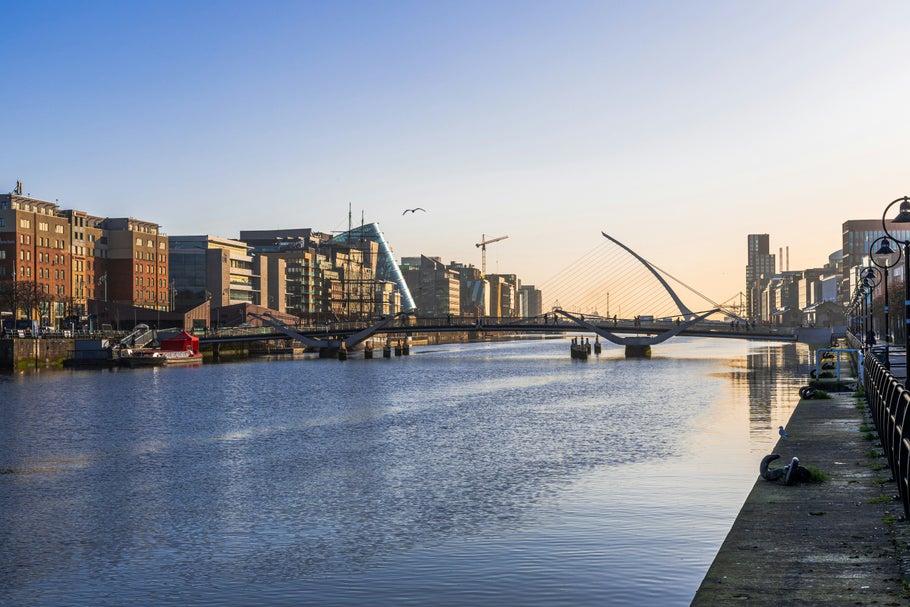
Image: Dublin by Alessandro Santoro for Unsplash
After my recent trip to Dublin and my attendance at the Nordic Hotel Investment Conference a few weeks earlier, I have been reflecting on the parallels between these two hotel markets. Both offer opportunities rooted in landscape, climate, culture and authenticity, but Ireland’s regional markets have a distinct investment story. These are some of the themes I took away.
TRADING PERFORMANCE: REGIONAL DESTINATIONS STAND OUT
With air arrivals at Ireland’s six main airports up over 14% year on year, occupancy held firm with a modest gain, while average daily rate (ADR) drove performance. Regional hotels continued to trade well through 2026: Galway recorded revenue per available room (RevPAR) growth of 4.7%, compared with Dublin’s 1.9%, while Kerry reached 11.8%. This points to the continued appeal of authentic, culturally curated experiences, with spending at the upper end of the market remaining relatively resilient.
Supply growth has stayed disciplined, with a compound annual growth rate of 1% over the past decade, representing approximately 6,000 additional rooms. More than 80% of that growth has been in Dublin, with 36 net openings. The capital’s strong fundamentals and appeal to leisure, business, and meetings and events guests continue to attract investment, although the additional supply is now tempering RevPAR growth. Those openings are also diversifying the hotel landscape and driving branding, while penetration remains low in the regions outside the Dalata portfolio.
Despite sustained international investor interest and the historic Dalata portfolio transaction, the rest of the market remains dominated by domestic investors and operators. That distinction matters when considering how Ireland’s next phase of investment might develop.
LIQUIDITY: TWO DIFFERENT STORIES
Regional liquidity tells two different stories. High-net-worth investors and families continue to hold assets for the long term, with some well-capitalised owners investing in the upkeep of landmark hotels. Elsewhere, several hotels outside the high-end boutique segment have relied on government accommodation contracts. Governments in Ireland, the UK, and across Europe face increasing political pressure to move away from these arrangements, but not every owner has the capital needed to refurbish and return competitively to the tourism market.
According to Green Street earlier this month, asylum accommodation now accounts for around 2% of UK hotel supply, down from 8% in 2022/23. In Ireland, reports from Fáilte put the share at around 4%, down from over 10%. Both governments are seeking to reduce their reliance on costly commercial accommodation providers.
For me, the question is not simply which assets become available, but what it will take to reposition them. Much of the reduction in government accommodation has already taken place, yet the stock still to return remains meaningful in certain regional markets. As contracts end, returning supply could put further pressure on the lower end of the market, particularly where travellers are seeking newer, more competitive accommodation.
TRANSACTIONS AND DEVELOPMENT: SELECTIVE MOMENTUM
Transaction volumes in Ireland were low in the first half of 2026 and concentrated in the regions. Dublin nevertheless saw a number of sale processes begin. The Crowne Plaza and Holiday Inn Express Dublin Airport transactions have closed, while The Morrison Dublin, Curio, and the Conrad Dublin remain on the market and are likely to attract a range of capital sources. The Hilton Dublin Airport, which transacted in late summer, is set for refurbishment and an extension, followed by rebranding to voco by IHG next summer.
As in the UK, new development remains under pressure. Premier Inn stands out as a player continuing to make progress since its first opening in 2019. With six hotels operating in Dublin and Cork, and another 1,000 rooms in the pipeline, Whitbread PLC is expanding towards its medium-term target of 5,000 bedrooms across the Republic of Ireland. Developing its own sites, followed by sale-and-leaseback deals, has been part of that approach. Planned openings include Limerick, a second hotel in Cork and further expansion in Dublin.
IRELAND AND THE NORDICS: DIFFERENT MARKETS BUT A SHARED THEME
Visiting Dublin so soon after the Nordic Hotel Investment Conference brought some clear parallels into focus: development constraints, liquidity and the potential to elevate the guest offering. Less obviously, I can also see Ireland benefiting from elements of the “coolcation” trend. Dublin’s connectivity is strong, with many historic towns and natural heritage sites within roughly two and a half hours’ drive. That accessibility is an advantage, although the option to use Dublin as a base for day trips may also challenge regional lengths of stay.
Connecting the dots across my recent trips, I see a common theme beyond the Pandox/Dalata transaction. Ireland and the Nordics appear increasingly well placed to monetise landscape, climate, culture and authenticity, rather than relying exclusively on traditional urban tourism infrastructure. They do not offer the same tourism product, but they share a similar urban-to-experience tourism ecosystem.
Disciplined supply is another common denominator, with demand expanding in both markets. Ireland’s pipeline is much more Dublin-centric, however: approximately 80% of rooms under construction are in the capital. As Nordic transaction activity sees a growing share of value-add assets and leisure and northern destinations, I see potential for a similar investment focus in regional Ireland. Capital expenditure pressures on independent hotels, alongside demand for nature-led travel, could create opportunities for investors willing to reposition existing assets.
THE REGIONAL OPPORTUNITY: POSITIONING AND SEASONALITY
Whether measured by ADR or transaction price per room, the Ireland market often commands a noticeable premium over regional UK markets when the capitals are excluded. That reflects differences in the scale and the mix of hotel stock, as well as Ireland’s supply constraints.
Seasonality also remains pronounced. Regional Ireland’s peak-to-trough RevPAR ratio approaches 2.5 times, driven by leisure demand and strong summer peaks in coastal destinations. Extending the season is therefore a central challenge, rather than a secondary consideration.
My closing takeaway is that Ireland’s opportunity is not simply to add rooms, but to invest thoughtfully in existing hotels and connect them more closely with the experiences that draw travellers here. The comparison with the Nordics helps explain why. Both markets benefit from resilient domestic demand, growing international leisure tourism and increasingly valuable experience-led regional destinations, but the crucial distinction is maturity. The Nordics offer a larger, more institutionalised and diversified investment ecosystem, while Ireland remains smaller, highly Dublin-centric, unusually independent and under-branded. In my view, that leaves meaningful scope for consolidation, branding and repositioning. As government contracts unwind and development and refurbishment costs remain high, it is this potential in existing assets that I will be watching.
To discuss the hotel market in more detail, get in touch with Pierre: pierre.ricord@christie.com or 07546 698 685