
Transforming tomorrow: a deep dive into our NDNA conference survey results
In this blog post, Courteney Donaldson (Managing Director – Childcare & Education at Christie & Co) analyses the findings from Christie & Co’s latest survey, conducted at the NDNA conference earlier this month.
Business. Built around You.
Your expert business property advisers

Courteney Donaldson
Managing Director - Childcare & Education
Earlier this month, my colleagues David Eaves, Sam Brooks, Oliver Guppy, and I attended the NDNA Annual Conference in Liverpool.
During the conference, we asked early years providers three simple but powerful questions which linked into the event’s theme of ‘Transforming Tomorrow: The Power of Early Years Today’:
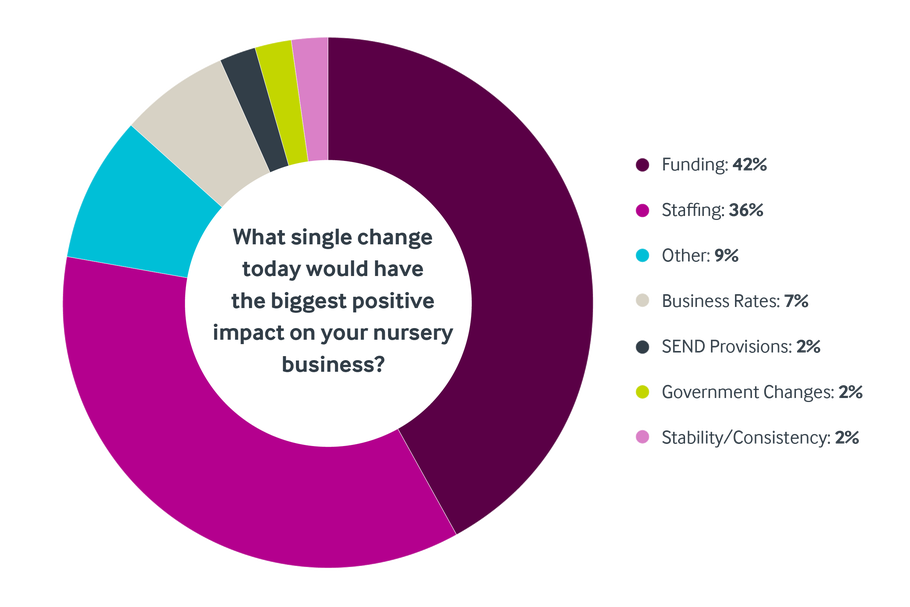
What single change today would have the biggest positive impact on your nursery business?
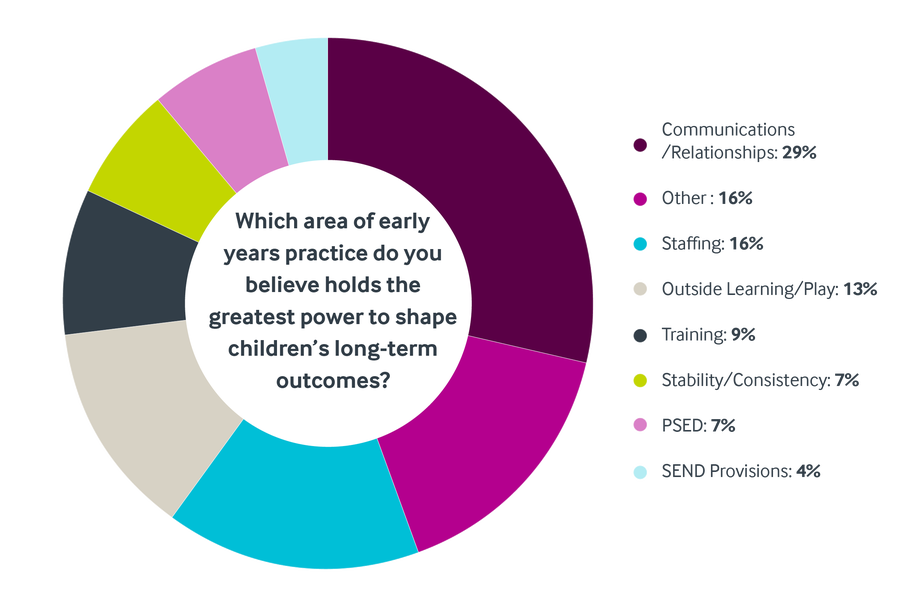
Which area of early years practice has the greatest influence on children’s long-term outcomes?
What is the biggest opportunity for the sector over the next 12 to 24 months?
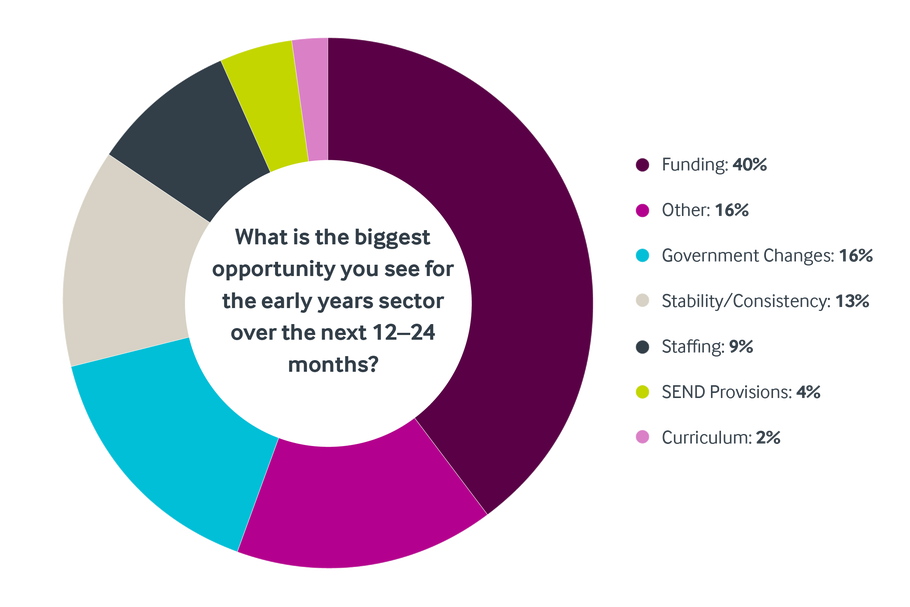
Across all responses, three clear and consistent themes emerged: funding, workforce, and quality of practice and relationships. While the detail varied, the strength of alignment across providers highlights the continued structural pressures facing the early years sector, and where attention must further be focused.
1. FUNDING: THE OVERARCHING PRIORITY
Funding was the dominant theme across all the responses. It was cited most frequently as both the single biggest change needed and the largest future opportunity, with respondents consistently calling for “better funding rates”, “fair funding”, and systems that “cover the costs of the private nursery sector.”
Concerns were not limited to funding levels alone, as providers also referenced complexity and inequality within the current system, highlighting issues such as differences between local authority funding, the impact of government policy, and perceived inconsistencies across different types of provision. There was a clear sense that, without meaningful reform, many settings will continue to struggle with financial sustainability.
At the same time, respondents recognised that funding changes could unlock growth; supporting expansion, improving pay, and enabling greater investment in children’s experiences.
2. WORKFORCE: RECRUITMENT, RETENTION, AND PROFESSIONAL VALUE
Workforce challenges closely followed funding as a second core theme. Responses repeatedly referenced “staff retention”, “more reliable staff”, and the need for “qualified and committed” practitioners.
The link between funding and workforce was evident throughout, with many providers pointing to pay constraints as a key barrier to recruitment and retention, alongside wider challenges relating to training, career progression, and recognition of the profession.
Encouragingly, there was also a strong forward-looking narrative. Respondents spoke about opportunities to “invest in staff”, strengthen workforce development, and reposition early years as a valued career path. This reflects a growing recognition that long-term sustainability depends on building a resilient, skilled, and motivated workforce.
3. QUALITY OF PRACTICE: RELATIONSHIPS AT THE HEART
While funding and workforce dominated operational concerns, the third key theme focused on quality, particularly the importance of relationships and interactions.
When asked which element of practice most shapes long-term outcomes, many respondents highlighted “communication”, “relationships”, and the quality of adult-child interactions. These were often described as the foundation of children’s development, alongside strong references to staff knowledge, SEND provision, and inclusive practice.
This reinforces a well-established message within the sector - that outcomes are driven not just by structural inputs, but by the day-to-day experiences children have in settings which centre on ‘quality’. Despite financial and operational pressure, providers that engaged with and responded to our survey wholly evidenced their incredible commitment to delivering high-quality early years education and care.
COLLECTIVELY & COLLABORATIVELY
These survey findings present a coherent and compelling narrative; providers are clear that adequate, fair funding is the enabler, a strong workforce is the vehicle, and high-quality relationships and practice are the outcome that enable every child to have the best possible start in life.
If addressed in tandem, these priorities offer a pathway not only to stabilise the sector, thus enabling parental choice, but to strengthen its long-term impact. As the sector moves through a period of significant policy shifts, changes and expansion, the voice of providers remains critical, and this survey offers a timely snapshot of where these voices, their experiences, focus, drive and ambition are most aligned.
To discuss the findings from the survey in more detail, get in touch with Courteney Donaldson: courteney.donaldson@christie.com or 07831 099 985