

Business Outlook 2026 | Children's Social Care
In this section, we explore the children's social care market in 2025 and provide predictions for the sector in 2026.
Market Overview
Sector shifts
The children’s social care sector significantly expanded in 2025, with the number of registered children’s homes in England increasing by 15% to 4,010 homes. This growth reflects both the rising demand for residential care and the challenges local authorities face in securing sufficient foster placements.
Last year, we also saw a rise in the number of local authorities seeking to bring residential children’s services in-house. With ring-fenced budgets, several authorities in England and Wales acquired operational homes and properties suitable for conversion last year, and a sufficiency report published in December 2024 revealed that 77 local authorities plan to open their own children’s homes by the end of the 2026/27 financial year.
A major change effective in 2025 was with the Landmark law in Wales to end profiteering from childcare in care; the Health and Social Care (Wales) Act 2025 became law on 24 March 2025. Wales has become the first UK nation to introduce legislation that phases out private sector ‘for-profit’ children’s residential and foster care providers. In the future, care for looked-after children will be delivered solely by not-for-profit organisations, charities, and public bodies.
In 2025, 18,040 looked-after children (22% of all looked-after children) were placed more than 20 miles from home and 69% were placed within 20 miles. To tackle this, in October 2024, the Government introduced the Looked After Children (Distance Placements) Bill, which will require local authorities to publish statistics about the number of looked-after children who are living 20 or more miles from their home because of a lack of placements within their local authority area. The last update on this was in March 2025, and live updates can be sourced via the Parallel Parliament website, here.
Alongside this, the Department for Education is working in partnership with local government to develop Regional Care Co-operatives (RCCs), which will plan, commission, and deliver care places in fostering, children's homes and secure homes. The Department will provide £3.46 million in funding to two pathfinder regions up to 2026. Bids were received from all local authorities, and Greater Manchester and the South East were selected. It could be viewed that larger providers will have an advantage over smaller providers.
Transactional activity
Similar to 2024, market activity across the sector was moderate in 2025, as the supply of operational assets remained stark due to many operators retaining and expanding their existing businesses to meet the demand for services.
For those homes brought to the market, buyer interest was strong, particularly for high-quality operational businesses, well-located vacant properties, and those with C2 use and CLD. A competitive marketplace supported resilient pricing in the sector.


Julie Kitson
Director
Key Market Trends
The growth of the sector in 2024/25 was largely driven by the ongoing increase in registered children’s homes and the continued registration of supported accommodation providers (supported accommodation providers were not regulated before April 2023).
As of 31 March 2025…
Market Predictions for 2026
- Assets with strong quality metrics, robust workforce models, and transparent finances should attract strong buyer interest
- We expect to see measured growth in regulated capacity
- We’ll see selective capital deployment
- Value-add strategies will focus on new home openings, registration transitions, and demonstrable improvements in outcomes
- Continued policy and regulatory interventions
Case Studies

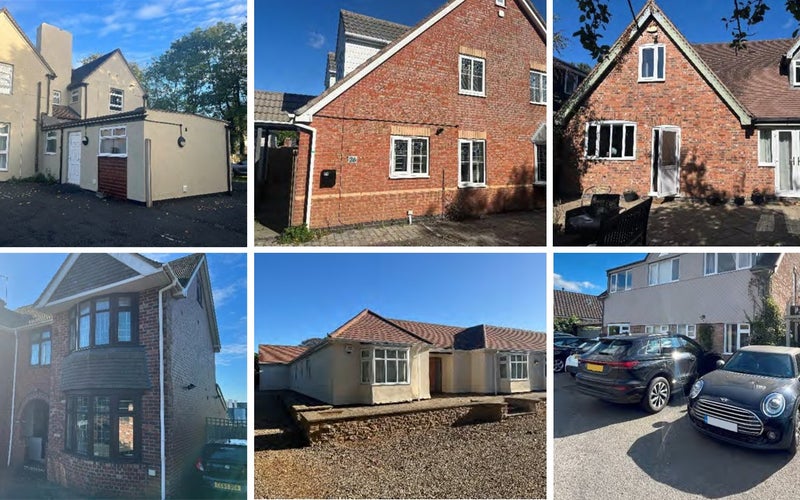
Project Cosmos, Northampton & Midlands
In early Autumn 2025, we were instructed to facilitate the assignment of a portfolio of six former children’s homes in Northampton and the Midlands. The mandate drew a significant level of interest from children’s social care providers nationwide. The leasehold nature of the portfolio also created a great level of interest from new organisations and individuals seeking to enter the sector, alongside interest from owners of single-setting children’s homes.
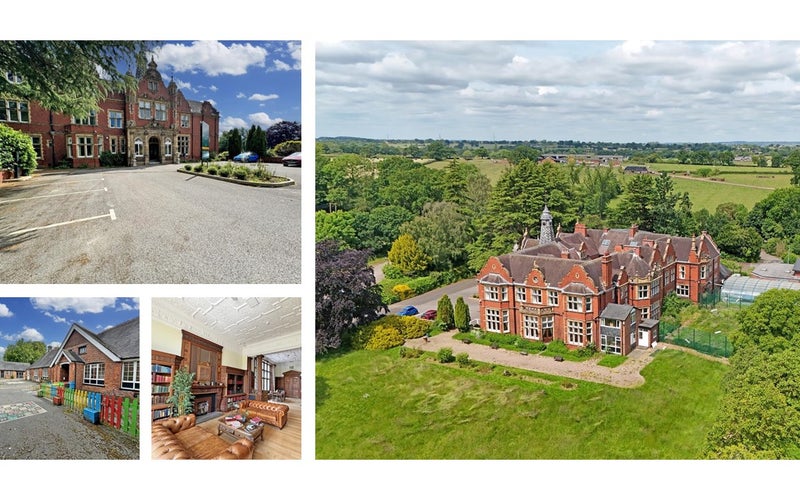
Smallwood Manor Hospital, Uttoxeter
Originally designed by Robert Edis and built in 1886, this 48.66-acre estate is centred around Smallwood Manor, a Grade ll listed Elizabethan-style country residence partly refurbished in 2021 to accommodate a children’s hospital and mental health centre.
It was previously a private school that ceased trading in 2021 and, although it was partly refurbished to provide alternative care facilities, it subsequently came back to the market in 2024.
In March 2025, the site was purchased by the independent children’s home provider, Resicare Alliance.
Major Transactions in 2025
| Date | Business | Purchaser | Details |
| Mar | Nurture Childcare Services Limited | Pebbles Care Limited | A portfolio of six homes in the North West, which provide specialist residential care and supported living for young people. |
| Mar | Smallwood Manor | Resicare Alliance | Smallwood Manor is a listed property that was built in 1886 and is set in a 48.66-acre estate. |
| May | ADHD360 Limited | Keys Group Limited | ADHD360 Limited is a private healthcare provider specialising in neurodiversity assessments, diagnosis and treatment. |
| Aug | Mable Therapy Limited | Keys Group Limited | Mable Therapy Limited is an established speech and language therapy organisation based in Leeds that provides speech and language assessments and treatment for children and young people. |
| Nov | CF Group | Keys Group Limited | The group operates four residential homes for children in Suffolk with social, emotional, and mental health needs, and delivers social work assessments to support local authority demands. |