

Business Outlook 2026 | Restaurants
In this section, we explore the restaurant market in 2025 and provide predictions for the sector in 2026.
Market Overview
In good news, the UK’s Top 100 restaurant groups recorded double-digit growth in annual sales and profit up to mid-2025, following two years of adjustments, cost-cutting, and site rationalisation. Many operators adopted a cautious ‘wait and see’ approach ahead of the Autumn Budget, and optimism was dented following November’s announcements which will have an impact through higher wages and rates bills.
Despite some brands reducing store numbers by as much as 50%, scale continues to deliver benefits. Operators are increasingly leveraging technology and AI to improve efficiency both front of house and behind the scenes.
Independent operators, representing around 80% of the market, have faced greater challenges from food inflation and are less able to raise funds for investment and marketing. However, they are typically better at generating loyalty, sourcing locally, providing more flexible and niche menus, and generating a wider following through more personalised social media – these are all important factors for attracting the less cost-conscious diner.
Customer retention strategies such as loyalty schemes and promotions are now critical, influencing roughly a third of dining occasions where consumers return to trusted venues. Legacy brands who face a more discerning customer base are under pressure to innovate: those unable or unwilling to adapt, risk further decline, with potential casualties through strategic reviews, discounted transactions, and consolidation in the year ahead.
Headwinds persist. Food inflation remains above RPI, utility costs are still up around 10% year-on-year, and higher business rates loom as relief measures are withdrawn. Wage inflation, driven by National Insurance contribution increases, has exacerbated staff turnover, which is up from around 3% to 38%, as well as staff shortages which are estimated at 100,000, impacting service quality and consumer satisfaction.
Adding to the challenge is the rise of supermarket ‘grab and go’ options. As consumers tighten their belts, many are dining out less and opting for shop-bought, dine-in alternatives. Discretionary spend for a night out in 2026 is likely to shift toward fewer visits, but potentially higher spend per occasion.
Still, optimism persists. Prospective restaurateurs remain resilient, and those who execute well are seeing positive KPIs. In 2025, we saw local and regional operators adding one or two sites to their portfolios, either through brand roll outs or new concepts supported by strong back-of-house teams. Despite our sentiment survey showing that 62% of stakeholders feel negative about the sector, only one in five are looking to sell, showing a dogged determination to succeed.
Demand for leased premises is more subdued, even in London, except where landlords offer rent and fit-out concessions. Drive-thru and takeaway sites are an exception, with rents accelerating to potentially unsustainable levels amid high demand and planning restrictions. Franchising continues to attract hospitality entrepreneurs seeking certainty, with many franchisees diversifying across multiple brands to mitigate risk.
Lifestyle businesses also remain popular, supported by underlying freehold value. With some funding available, and accommodation often included, freehold sales accounted for 44% of our restaurant transactions in 2025, with a total value exceeding £12 million.


Stephen Owens
Managing Director – Pubs & Restaurants
Key Market Trends


Price Index


Restaurant prices are nowhere near where they once were, but we have seen more people buy and be prepared to pay a premium. From a reduction of around 40% post-pandemic, we've seen a recovery of around 10% for this year, with more freehold restaurant transactions and a more competitive transactional market.
Market Sentiment
We anonymously surveyed restaurant professionals across the country to gather their views on the year ahead.


Market Predictions for 2026
- Demand for dining out experiences will remain, with the overall food service market set to grow until 2030 with a CAGR of 6.6%.
- Technology will help generate efficiency, productivity and enhance the consumer experience at all levels, from staff rotas and stock management to bookings and personalised offers.
- QSR will continue to expand and innovate with new food offers, offering reliability and speed. However, oversaturation may stall the growth of some brands.
- Sustainability, health and ethical values may start to become more of a consideration for many diners, with 20% already suggesting these factors influence their choice of venue. Regulation and supply may further drive this trend.
- Franchising remains a popular avenue for hospitality entrepreneurs as it offers a degree of certainty, and this has driven a rise in store openings. This is likely to continue, with many franchisees taking up multiple brands to de-risk further and avoid exposure to a single product.
Case Studies

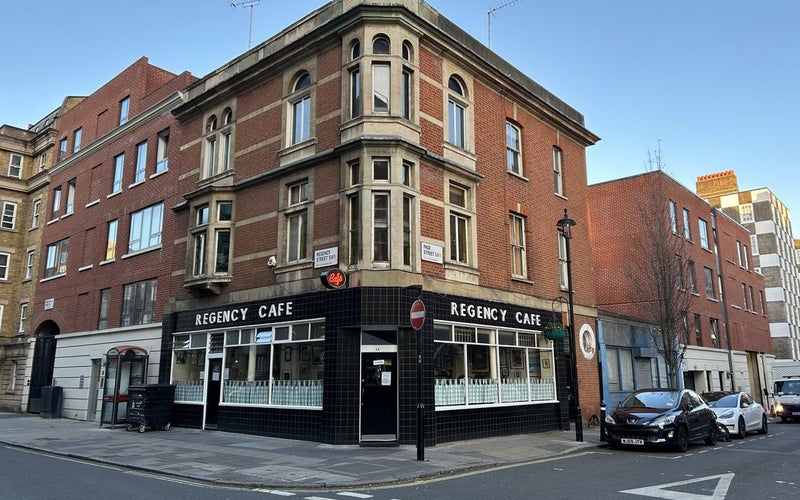
Regency Café, London
The lease for the famous London café, which featured in films such as Layer Cake, Pride and Rocketman, was sold for an undisclosed premium. The café had operated successfully as a family business for over 40 years and was purchased by an experienced independent operator who took on a new 15-year lease on the property.
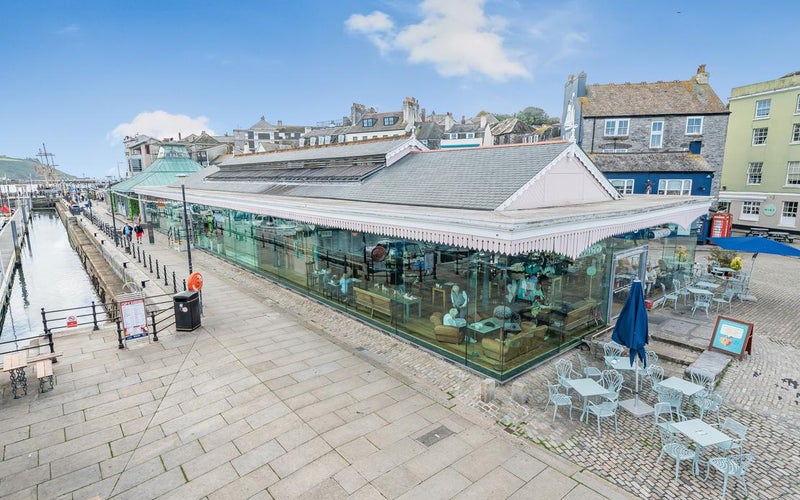
20 The Barbican, Plymouth
Sold on behalf of a large estate, the freehold for 20 The Barbican on the seafront on Plymouth was acquired by the existing operator of the venue, using bank funding.
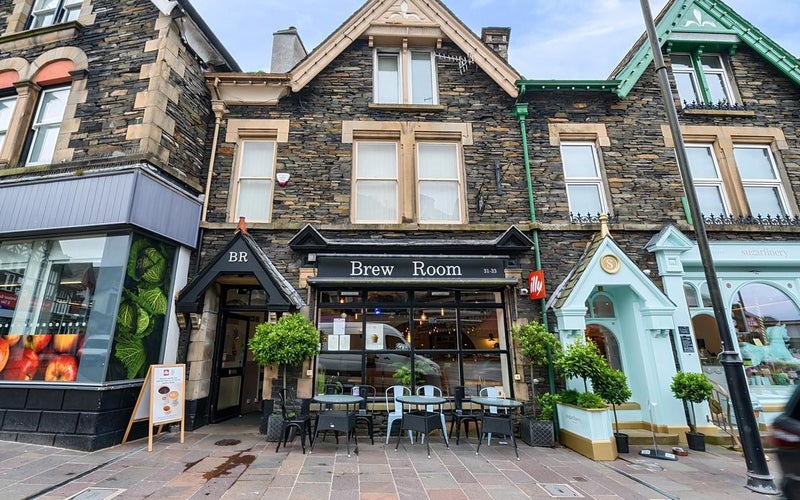
31-33 Crescent Road in Windermere, Cumbria
31-33 Crescent Road is a prominent mixed-use property in central Windermere, with residential accommodation above a ground-floor restaurant, which was acquired by a private buyer in an investment sale. The opportunity attracted significant interest from investors, reflecting continued confidence in the Lake District’s hospitality property market.
Major Transactions in 2025
| Date | Business | Purchaser | Details |
| Jan | Wingstop UK | Sixth Street | Lemon Pepper Holdings, the master franchisee for Wingstop in the UK & Ireland, announced that Sixth Street, a leading global investment firm, has signed a definitive agreement to support Wingstop UK’s continued growth and become the company’s majority shareholder for a reported £400 million. |
| Jan | Loungers, Cosy Club & Brightside | Fortress | Loungers was sold to Fortress in a deal worth a reported £354.4 million. |
| Mar | Caravan | Caravan (Management buyout) | All-day dining and speciality coffee chain Caravan completed a management buyout, resulting in private equity firm Active Partners exiting the business. |
| Apr | Marugame Udon | Karali | Marugame Udon signed a master franchise deal with Karali Group in a move it said will allow it to further expand across the UK and Ireland. |
| May | German Doner Kebab (GDK) | True | Private equity group True made a strategic investment in the circa 170-strong German Doner Kebab (GDK) brand, to support its continued rollout in the UK and accelerate growth across existing and new markets globally. |
| May | Yard Sale Pizza | Piper | Piper, the private equity backer of Flat Iron and Turtle Bay Restaurants, has acquired a stake in Yard Sale Pizza, the restaurant and delivery business, with plans to near triple the size of the current 14-strong business over the next five years. |
| Aug | Dishoom | L Clatterton | Indian restaurant group Dishoom agreed a deal for an undisclosed sum with US-based L Catterton in a move which sees founders Shamil Thakrar and Kavi Thakrar dilute their stakes. |
| Aug | Pizza Pilgrims | McWin & L'Osteria | Neapolitan pizza company Pizza Pilgrims reached an agreement with Italian restaurant group L'Osteria, part of the McWin brand portfolio, to acquire a majority stake in the business for an undisclosed sum. |
| Aug | Flat Iron | Trispan/McWin | Investors McWin and TriSpan teamed up to secure a co-control majority investment in the Flat Iron restaurant chain. It is understood that the deal values the 18-strong business at circa £70 million. |
| Oct | Cote | Karali | Côte, the French brasserie brand backed by the Partners Group, was sold to The Karali Group for an undisclosed sum. |
| Nov | Leon | John Vincent | Leon co-founder John Vincent bought back the healthy fast food chain from Asda with the aim of returning it to its core values. Vincent sold the business to the Issa brothers behind petrol forecourt company EG Group for a reported £100m in 2021. The ownership then transferred to sister business Asda two years later. |
| Dec/Jan | TGI Fridays | Sugarloaf | The business and assets of Liberty Bar and Restaurant Group Limited, the operator of TGI Fridays UK restaurants, have been acquired by Sugarloaf TGIF Operations in a pre-pack transaction. This sees the transfer and continuing operation of 33 sites across the UK. 16 sites were not included as part of the transaction and have closed. |